
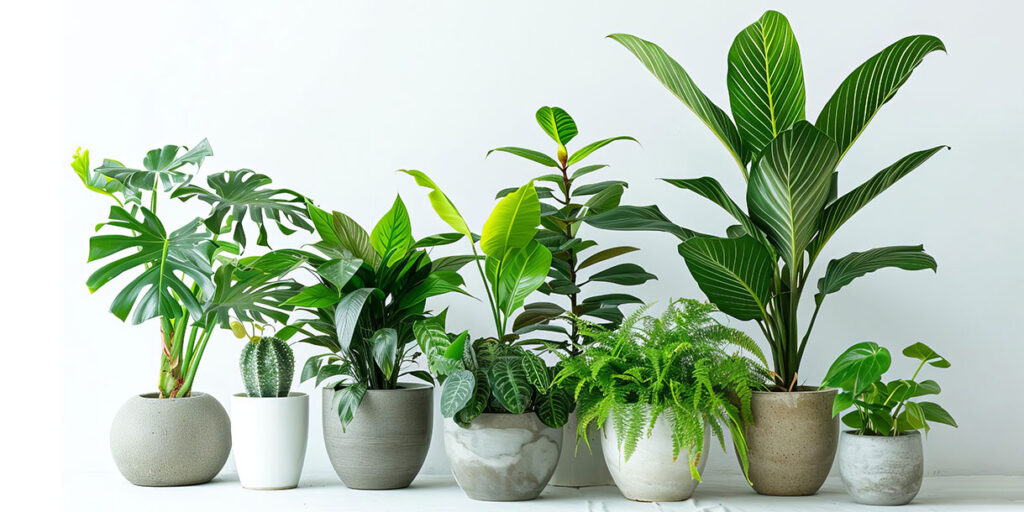
Whether you’re starting with one plant or ten (I see you), welcome to the wonderful, messy world of houseplants. If you’re brand new to plant care and don’t know where to begin, this should point you in the right direction. Let’s start with the basics, bust a few myths, and get you set up for a thriving plant-filled life.
What is a houseplant, anyway?
Technically, any plant you grow indoors is a houseplant. The lucky bamboo in your bathroom? Houseplant. Those struggling herbs on your windowsill? Houseplant. But not all plants want to be indoors. Houseplants are typically species that naturally grow in tropical or subtropical environments where they’re used to filtered light, warmth, and humidity—basically, they like the same cozy conditions we do with a few minor adjustments.
There are hundreds upon hundreds of houseplants out there and new ones are being discovered (or created!) all the time. Fortunately, the majority can be broken down into a few common families that tend to have the same wants and needs.
Succulents
These suckers (see what I did there?) are perfect for people who forget they have houseplants. They have thick, juicy leaves capable of holding water making them drought tolerant. Succulents can go quite a while between waterings, but still need bright, indirect lighting to thrive.
Some common succulent houseplants include echeveria, haworthia, aloe, and sedum. Sansevieria, the commonly known snake plant, also fall into this family, but they differ in how light-needy they are.
Ferns
Whose grandmother didn’t have a Boston fern growing somewhere in her plastic-covered home? Ferns are moderately low-maintenance plants that grow well in low light and high humidity. If you have north or east facing windows, they will thrive there. Common types that make great houseplants include the bird’s nest fern, rabbit’s foot fern, staghorn fern (my favorite!), and the crocodile fern.
Cactus
Fun fact for your face. Cacti are actually succulents. They need a lot of the same care as your haworthia and sedum, but their spines and prickles put them in a family all their own.
Aroids
The Araceae, commonly called aroids, are my absolute favorite of all the houseplants. I have more in my collection than anything else and they still turn my head everywhere I go.
Aroids are a mostly tropical family, so they prefer higher humidity. They can tolerate low light but do best under medium. Some species need brighter light to meet their specific needs, typically variegated ones, but we’ll go into more detail on that in a future post.
Common aroids include the monstera, philodendron, pothos, and peace lily.
Choosing Your First Plant
When it’s time to adopt that first plant, start with something low maintenance. You don’t yet know how houseplant care will fit into your daily schedule, so as you’re learning to keep something else alive, something that’s forgotten every once in a while is a great start.
Outside of all the “rescued” succulent leaves I obsessively propagated (thank you 2021 TikTok), my first houseplant adoption was an aglaonema, aka Chinese evergreen—an aroid of course. I couldn’t kill her no matter how hard I tired … at least until my collection got too big and I kind of chose new favorites over her. It’s okay, I don’t have any deep seeded regret about that. At all.
Anyway, I chose a plant that was low light tolerant and content with infrequent watering—perfect for beginners. Snake plants, pothos, and ZZ’s are also classic starters without a lot of drama.
The Essentials: Light, Water, Soil, and More
Light
Who hasn’t heard the term “indirect light” and what the F does it even mean? Basically, indirect means the light has been filtered or diffused, so it’s not at full strength. Direct sunlight exposure can burn the leaves of many favorite houseplants.
Curtains and shears can help create indirect light. You can still keep your plants near an uncovered window, but far enough away that they are not hit by the sun’s rays.
If your space is darker, choose low-light-tolerant plants or consider grow lights. I have a small attic apartment with only two windows and a handful of skylights. I’ve replaced half the lamps in my house with grow lights.
Water
This is where most people stress themselves out. I get it. I’ve been there. Water, or not enough of it, is typically to blame for a plant’s inability to thrive.
Stick your finger an inch or two into the soil. If it feels dry, it’s probably time to water. If it still feels moist, wait a few days.
Sometimes simply lifting up the pot will give a good sign of how dry it is. Dried out soil is much lighter in weight. As you get to know your houseplants better, you’ll start being able to recognize the physical signs that they’re thirsty too.
Soil & Pots
Use a well-draining potting mix (not garden soil). Make sure your pot has a drainage hole. Soggy roots = root rot.
Most houseplants prefer an airy chunky soil that allows the roots to breathe and lets everything dry evenly between waterings. You can buy houseplant specific soil or create your own from a mix of potting soil, orchid bark, perlite, or many other soil amendments. Feel free to experiment with a variety of mediums to find out what works best for you and your plants.
And I don’t care how cute that elephant-shaped ceramic pot is. Anything you plant in it is going to die unless it has sufficient drainage. Most trendy, big-box store planters are made without drain holes. But that doesn’t mean you can’t use them. Keep your plant in the nursery pot and put the whole thing inside the larger ceramic one. This keeps space for air flow between the plant and the ceramic pot, and you can remove the nursery pot when it’s time to water.
Humidity & Temperature
Most houseplants like 60-80% humidity and temps between 65-80°F. They hate cold drafts, so keep them away from doors and windows in winter. I rearrange half the plants in my space when the seasons change.
Temperature hasn’t been a problem for me, but the humidity fluctuates a lot. I have a few humidity meters around and keep my most sensitive plants inside glass greenhouse cabinets.
Common Beginner Mistakes
Your new houseplant is less than thriving and you don’t know what to do. This will happen. A lot. (Prepare yourself.) Fortunately, there are a handful of common mistakes that beginners can keep in mind if they’re struggling through plant parenthood.
- Overwatering.
- Putting a plant in a dark corner and expecting it to be happy.
- Repotting too soon or too often.
- Buying 12 plants before you’ve kept one alive.
- Overwatering. (Seriously ya’ll. The #1 killer.)
Create a Care Routine
You don’t need a spreadsheet (unless you want one). Just pick one day a week to check on your plants. I use the Finch app and adding a weekly reminder to inspect my jungle has made a huge difference.
Look for:
- Dry soil
- Wilting or yellowing leaves
- Dusty leaves (wipe them down with a damp cloth)
A little weekly attention goes a long way.
Final Thoughts
Don’t panic. Even experienced plant parents lose plants sometimes. It happens. I’ve bought the same type of plant over and over only to watch it die again and again. Every crispy leaf or droopy stem is just part of the learning curve.
Start slow. Experiment a little. Learn as you go. And remember: your plant journey is unique to you—and it’s supposed to be fun.
Let’s grow together. 🌿